American market continues to attract European companies even as region’s governments embark on historic rearmament drive
Mercedes Ruehl in Zurich and Sylvia Pfeifer in London
The Financial Times Limited
Swiss aerospace and defence manufacturer Acutronic plans to double its US workforce and sharply increase production of jet engines for military drones and missiles, underscoring the pull of the American defence market even as European governments embark on a historic rearmament drive.
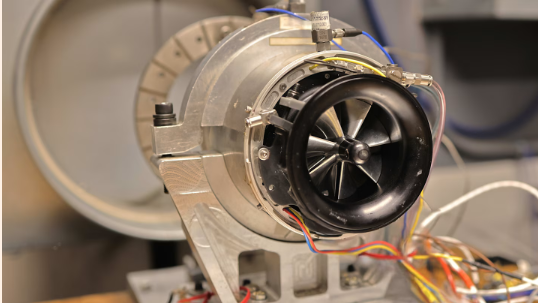
The Zurich-based company’s $100mn fundraising, backed by US investors InterAlpen Partners and Hale Capital, will help expand manufacturing, develop new technology and pursue acquisitions. Much of the investment is expected to support its fast-growing US business, which makes miniature jet engines roughly the size of a shoebox.
The expansion highlights a broader tension in Europe’s rearmament push, as companies continue to look to the US, the world’s biggest defence market, for growth even as the region’s governments seek to strengthen their own industries.
“The US is the most dynamic market,” chief executive Florian Aigrain told the FT, but added that Acutronic was also considering expanding production into Europe; being close to customers was increasingly important in the defence industry. It has existing facilities in Germany and France.
“There’s a desire for sovereignty of the supply chain,” Aigrain said. But he added that Switzerland, where Acutronic was founded more than five decades ago and still has substantial operations, was not the obvious choice for a new factory. “I’m not sure that we would start a jet engine manufacturing business in Switzerland today,” he said, citing the country’s high costs and “unique political limitations”.
Switzerland’s neutrality-linked regulations, such as export controls and banking restrictions, sometimes made it harder for companies to export products and conduct financial transactions. Aigrain stressed, however, that the country was still an important base because of its highly skilled and stable workforce.
Acutronic established its aerospace technologies business in the US eight years ago, where it had already operated for decades. Aigrain said its expansion there reflected “the strength of the domestic market over there and the need to be close to our American customers”.
Small jet engines, which power drones and relatively inexpensive missile systems, have become increasingly important as militaries seek to develop weapons that can be manufactured rapidly, at scale and lower cost.
“Jet engines are a bottleneck across the allied world,” Aigrain said. Acutronic aims to increase up annual production from hundreds to thousands of engines next year. The company, which employs about 400 people globally, roughly half of them in America, is looking to double its US workforce over the next three years, “perhaps more”.
Acutronic is not alone in navigating the constraints of operating a defence business from Switzerland. The country’s neutrality, strict arms export restrictions and position outside Nato have complicated access to European defence markets, leading some manufacturers to move operations abroad or establish separate supply chains.
Swiss-founded drone software company Auterion moved its headquarters to the US and established its military operations in America and Germany, while retaining civilian research in Zurich. Armoured vehicle maker Mowag has shifted some final assembly to Germany, while missile and drone maker Destinus moved its headquarters to the Netherlands as it expanded its European defence business.